
Lofoten Islands Travel Guide: When to Go, Where to Stay & How Long
Plan Lofoten with a clear view of seasons, bases, car vs no car, hikes, and time needed, plus how to reach the islands.
On this page
Last updated November 2026: the Lofoten Islands are an archipelago in Nordland, northern Norway, above the Arctic Circle. Four main islands form one chain, linked by the E10 road, bridges and tunnels. A car is the practical way to see them, and the best season depends on whether you want midnight sun, aurora or hiking.
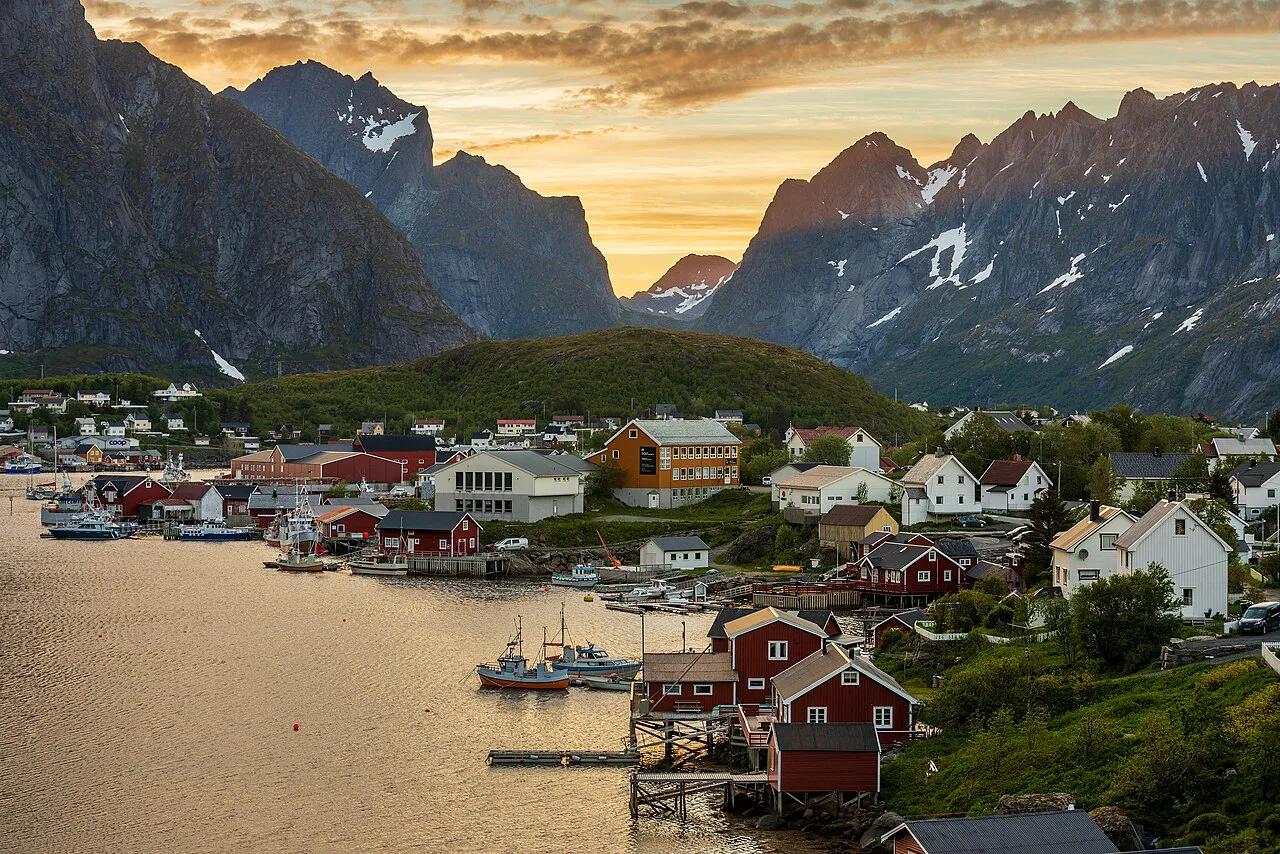
Featured image: Ximonic (Simo Räsänen), CC BY-SA 4.0, via Wikimedia Commons.
Lofoten Islands at a glance
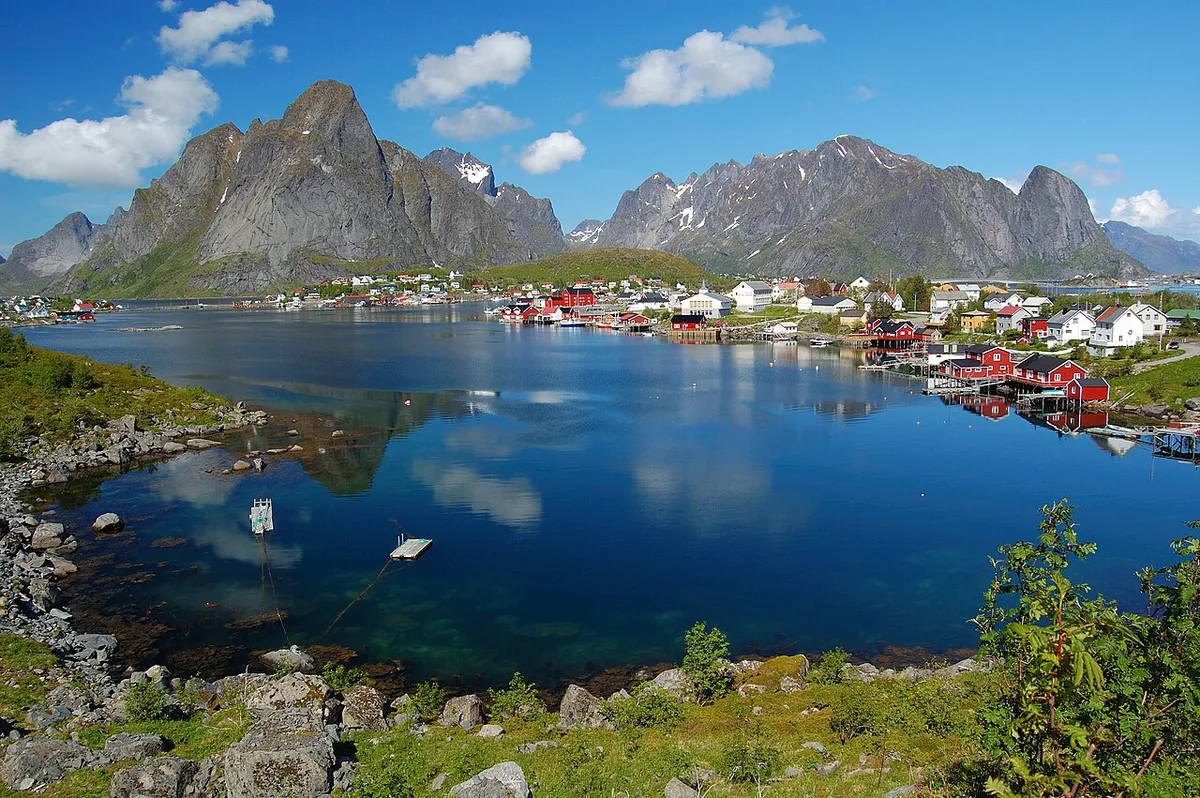
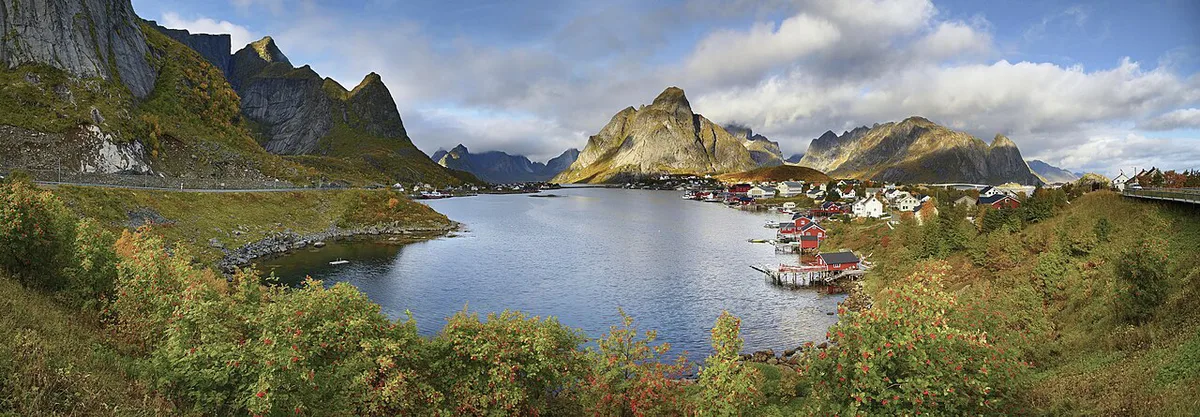
Lofoten sits in one of the narrower stretches of Norway, facing the Norwegian Sea. Peaks rise straight out of the water, and red fishing cabins cluster around small harbors. Værøy and Røst are sometimes counted as part of the group, but they lie well away from the main chain. For the wider region, start with our Norwegian islands overview. Use the list below to place the main villages.
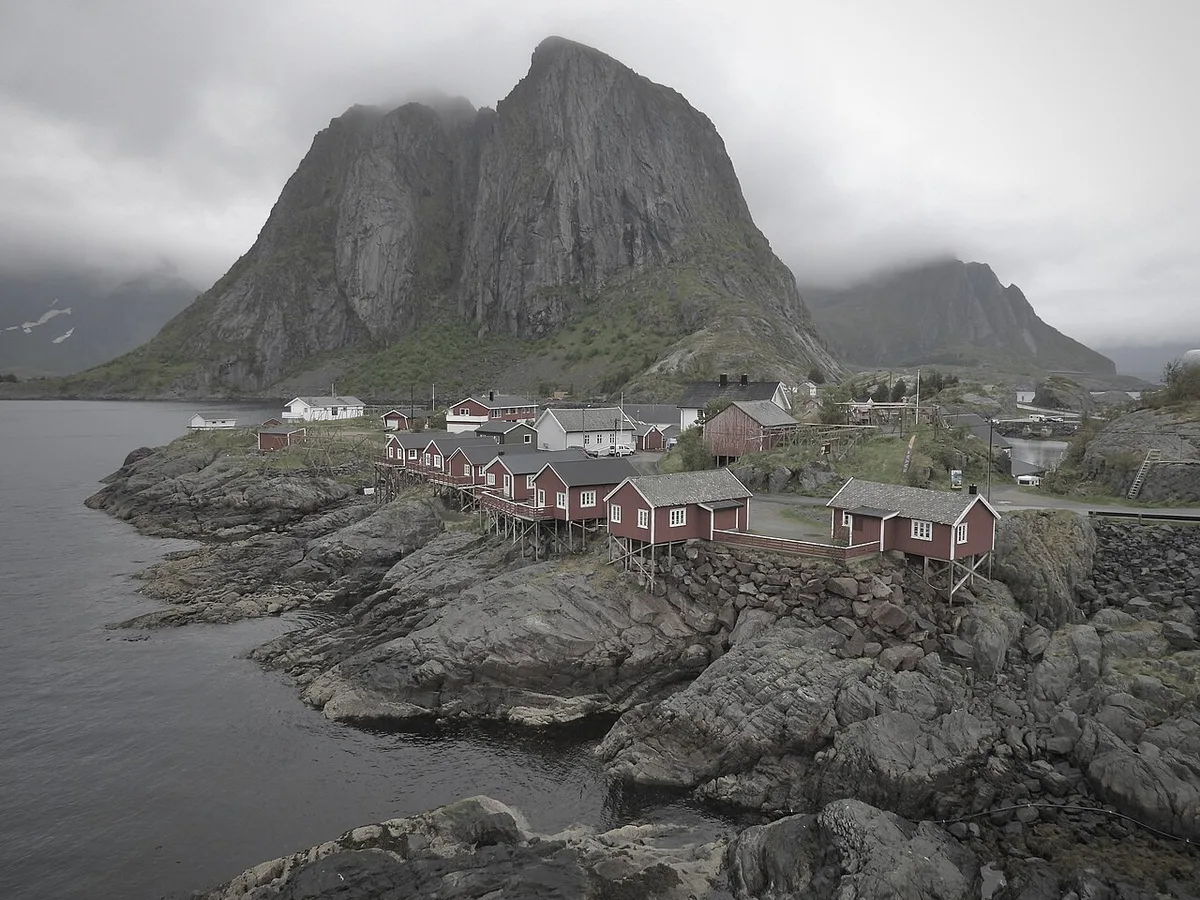
- Moskenesøy: Reine, Hamnøy and Å at the southwest end of the E10.
- Flakstadøy: Nusfjord and the red wooden Flakstad church.
- Vestvågøy: Leknes (central, with an airport), Borg and the Haukland and Uttakleiv beaches.
- Austvågøy: Svolvær, the largest town, and Henningsvær.
Best time to visit Lofoten
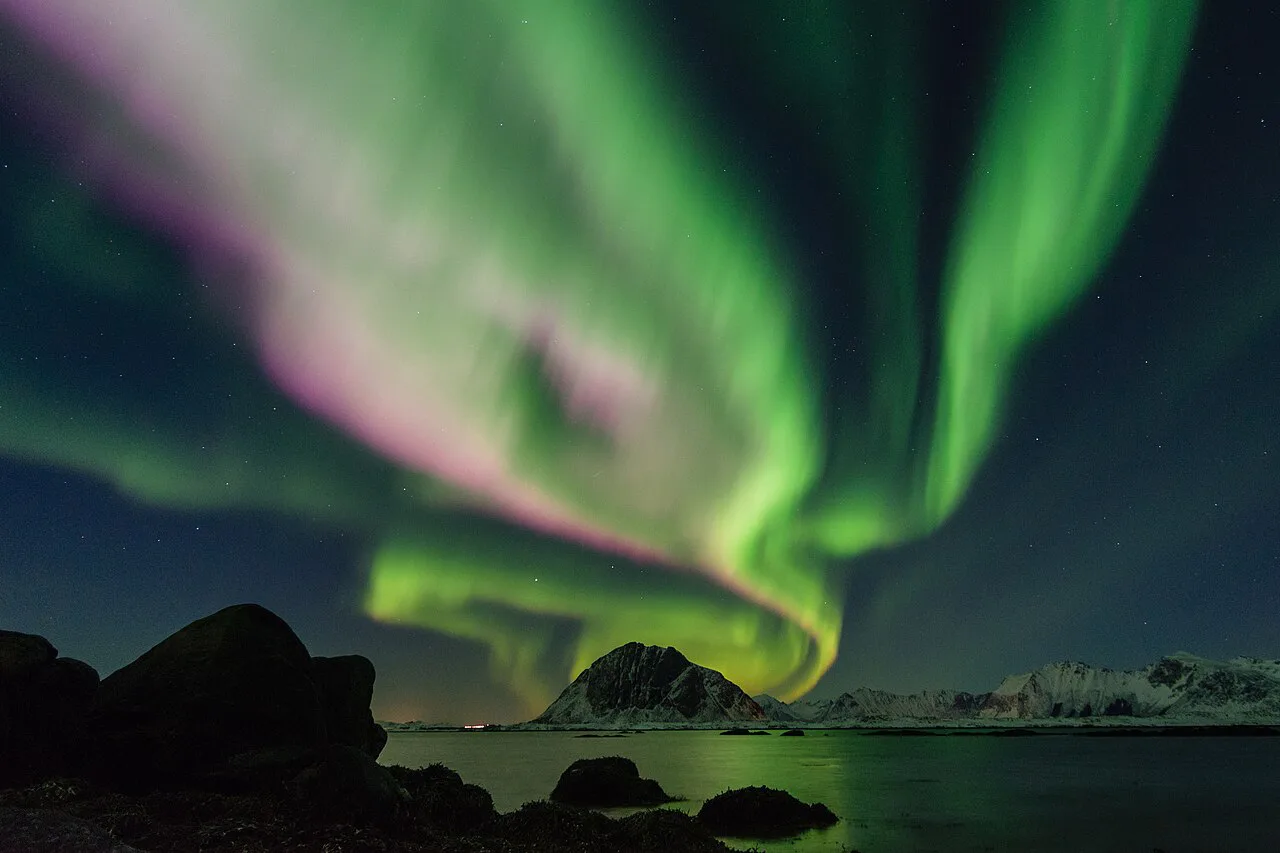
Midnight sun runs from late May to mid July. Sources give wider windows, so plan around the narrow range. Aurora season runs from September to March, and the two never overlap, because summer skies stay too bright. Deep winter brings only around four hours of daylight, plus ice and strong wind. Hikers should aim for summer, when trails are clear of snow. For aurora timing and viewing spots, read our Lofoten northern lights guide. Visit Lofoten publishes regional seasonal information that is worth a look before you book.
| Season | Light | Best for | Who should skip it |
|---|---|---|---|
| Late May to mid July | Midnight sun | Hiking, beaches, long driving days | Aurora hunters |
| August | Evenings darkening | Hiking with fewer bright nights | Anyone needing guaranteed dry weather |
| September to March | Dark evenings, aurora possible | Northern lights, snowy scenery | Nervous winter drivers |
| Deep winter | Around four hours of daylight | Aurora and quiet villages | Hikers and anyone short on driving experience |
Best things to do in Lofoten
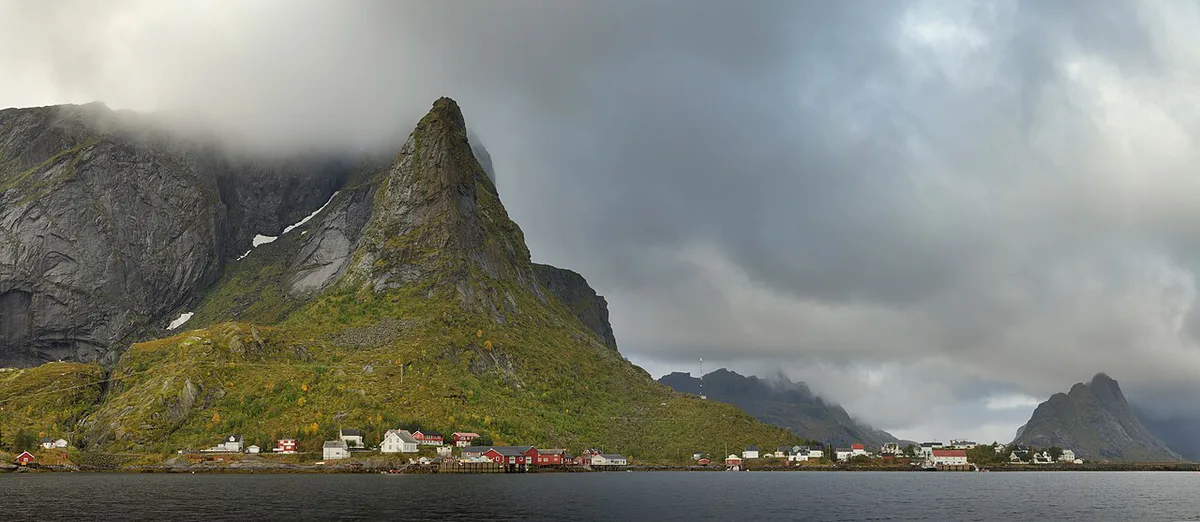
Group your days by type rather than ticking off a long list. Reinebringen is a steep climb of roughly 500 m above sea level, and ice and snow make it risky in winter. Check current access rules and path conditions before you set off. Haukland and Uttakleiv are the easy beaches, but wind and cold water limit swimming. Kvalvika needs a hike over Ryten, so treat it as a half-day outing.
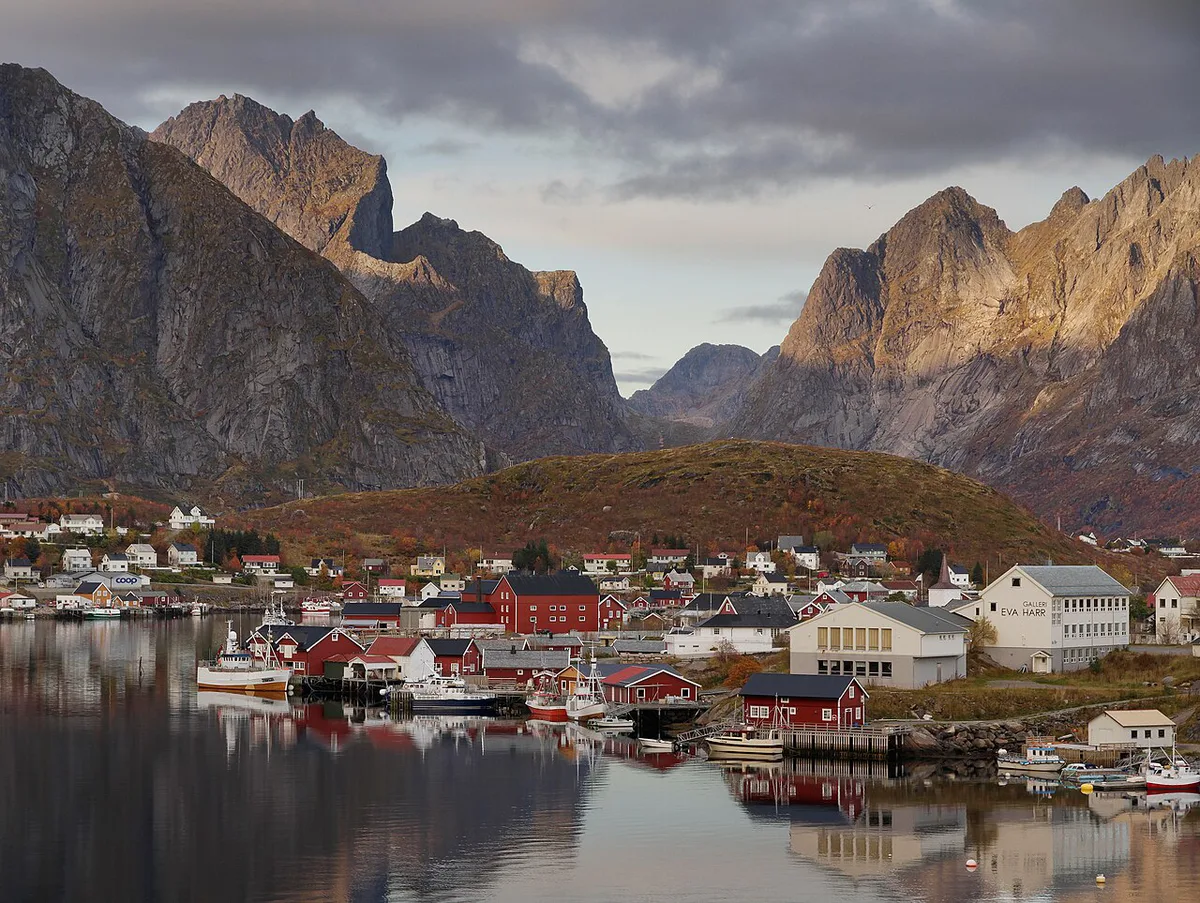
- Villages: Reine, Hamnøy, Å, Nusfjord and Henningsvær, each a short drive from the next along the E10 and side roads.
- Hikes: Reinebringen (steep), Kvalvika via Ryten, and Offersøykammen.
- Beaches: Haukland and Uttakleiv for easy access, Kvalvika for effort and solitude.
- Culture: Lofotr Viking Museum at Borg, with a reconstructed longhouse 83 m long.
- History: Flakstad church, begun in the 15th century and finished in the 18th, and the Lofotodden National Park visitor centre.
- Food: stockfish (dried cod) is the signature product, and Sakrisøy has a fish shop serving cod and cinnamon buns.
How many days do you need?
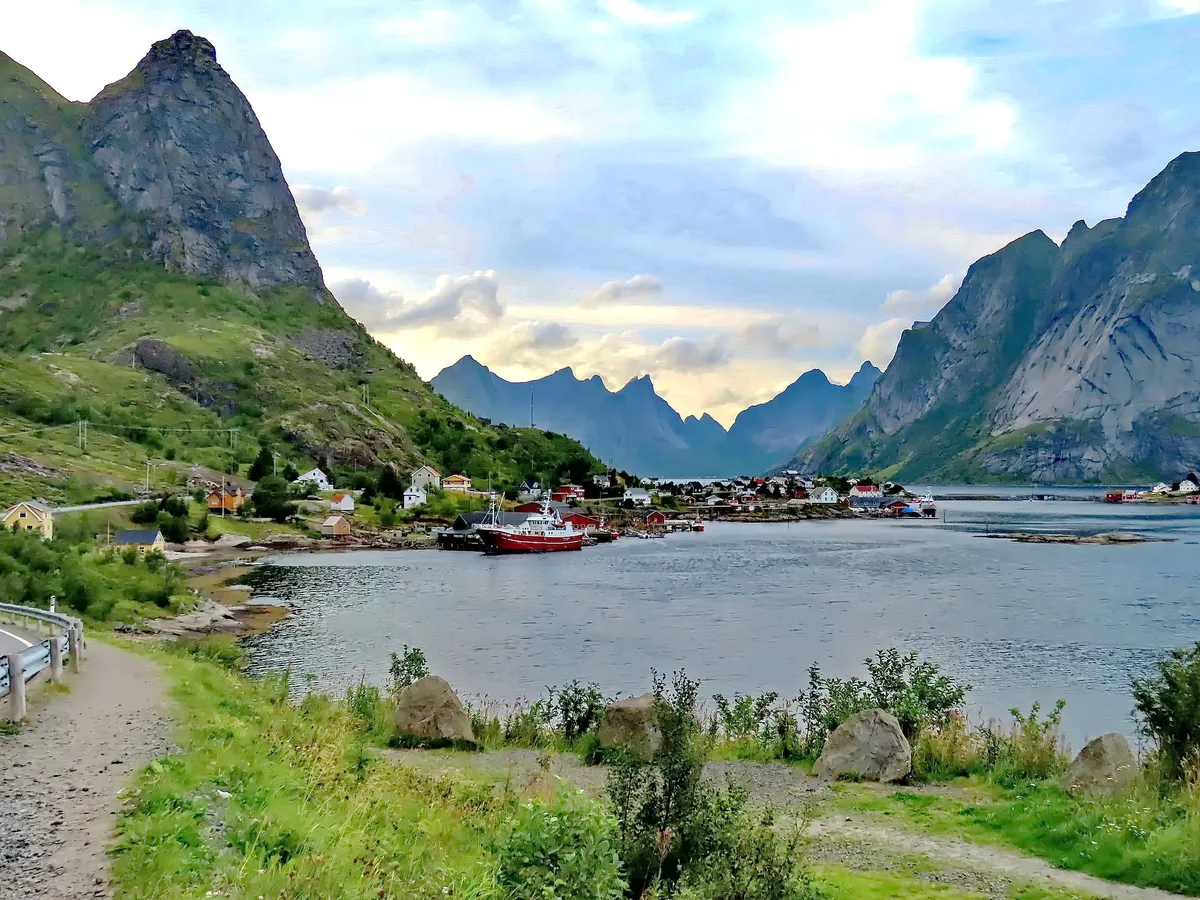
Four to five days is a common estimate for seeing the main chain by car in good weather. Three days works if you accept skipping a long hike. Seven days lets you absorb bad weather and add a boat trip or a second hike. Work geographically along the E10, from one end to the other, instead of doubling back.
- 3 days: Svolvær and Henningsvær, then Flakstad and Reine. Skip Kvalvika.
- 5 days: add Leknes, Borg, the beaches and one major hike.
- 7 days: add Nusfjord, Å, a rest day for weather, and a day trip into Vesterålen.
Where to stay in Lofoten: choosing a base
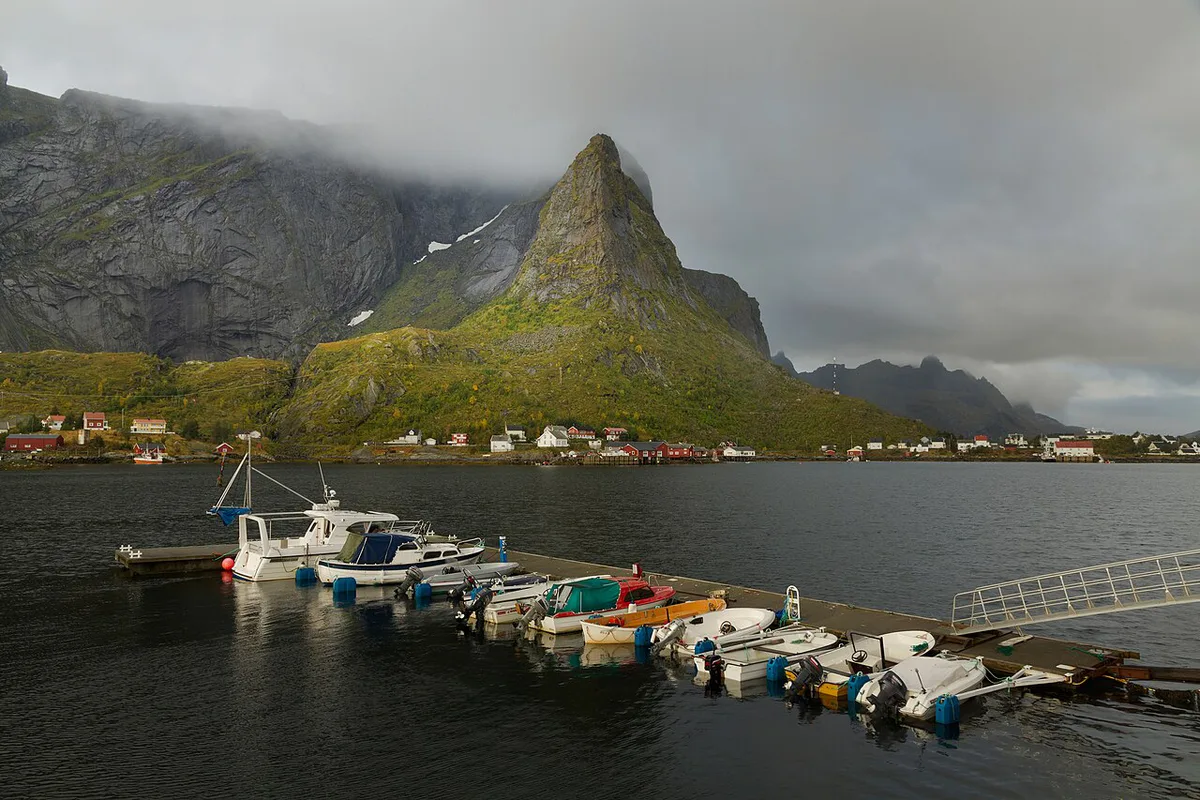
Location matters, because E10 driving times add up and winding roads feel slower than the map suggests. Henningsvær lies about 20 km southwest of Svolvær as the crow flies. Rorbuer, the converted fishing cabins, sell out months ahead, so book first and plan the route second.
| Base | Best for | Drawback |
|---|---|---|
| Reine / Hamnøy | Famous scenery, Reinebringen, Å nearby | Busy and cabin-heavy; far from northern airports |
| Henningsvær | Galleries, harbor atmosphere, shorter drive from Svolvær | Fewer services than a town |
| Svolvær | Largest town, shops, restaurants and an airport | Less of a village feel; far from Reine |
| Leknes | Central position, airport, supermarkets | Less scenic itself, though close to Haukland and Uttakleiv |
How to get to and around Lofoten
Many visitors fly to Bodø, then take the ferry to Moskenes, a crossing of about 3.5 hours. Our Bodø to Lofoten ferry guide covers the details. Check the current timetable with Torghatten Nord, since crossings change by season. Flights land at Svolvær and Leknes, and our flights to Lofoten page compares routes. Evenes serves Harstad and Narvik on the mainland side. Our full getting-there guide covers every option. Buses exist but are infrequent, so a car-free trip works best if you stay in one or two villages. Winter tyres are mandatory in the cold season, and many roads carry tolls.
Counting the ferry from Bodø, a crossing of about 3.5 hours eats into the four to five days the main chain needs by car.
- Car: the easiest way to reach trailheads and beaches.
- Bus: workable between main towns, limited for hikes.
- Ferry and flight: choose by season and baggage.
Costs and money-saving trade-offs
Four things drive the budget: the car, the ferry, cabin accommodation and restaurants. Rorbuer in Reine and Hamnøy cost more than guesthouses in Leknes or Svolvær. Self-catering saves money, since restaurant meals cost far more than supermarket food. Prices change often, so look up current NOK rates on the official Visit Lofoten pages and on each operator's site. Ferry crossings and tolls add up, so plan fewer, longer drives.
Practical tips and mistakes to avoid
Pack warm, windproof layers even in summer, because Arctic weather turns fast. Skip Reinebringen in ice. Book cabins early. Don't expect aurora during midnight sun. Alcohol is sold only in Vinmonopolet shops, which keep limited hours. Fuel and groceries can be sparse in remote parts, so top up in Leknes or Svolvær before heading to the far southwest.
Reinebringen climbs to roughly 500 m above sea level, so skip it when ice is around.
- Don't rely on public transport for hikes.
- Don't book late for peak summer.
- Don't assume trails are open; look up current conditions.
Nearby and similar destinations
Vesterålen lies to the north and offers a quieter alternative, including the Trollfjord area; read our Vesterålen guide. Travelers wanting a similar mix of peaks and sea with fewer crowds can try Senja. For a small island with open Arctic light, consider Sommarøy. Runde Island, Norway: Bird Cliffs, Puffins & How to Visit suits birdwatchers. For polar wildlife and a different kind of Arctic trip, see our Svalbard guide.
Frequently Asked Questions
Where are the Lofoten Islands?
Lofoten is an archipelago in Nordland county, northern Norway, above the Arctic Circle. The main islands are joined by the E10 road, bridges and tunnels.
How many days in Lofoten is enough?
Four to five days covers the main chain by car in good weather. Allow seven if you want a rest day for weather and a major hike.
Is it worth going to Lofoten in winter?
Yes, if you want aurora and snowy scenery. Expect around four hours of daylight, ice and strong wind, and plan winter driving carefully.
Are there polar bears in the Lofoten Islands?
No. Polar bears live on Svalbard, far to the north. Read our Svalbard travel guide for that trip.
Useful notes for your next island trip
Optional updates to our guides.
You might also like

Continue reading
More guides you'll find useful