St Kilda Scotland: How to Get There and What to See
Plan a trip to St Kilda, Scotland: how to get there from the Outer Hebrides, weather and booking risks, what you'll see on Hirta, and who should skip it.
On this page
Last updated November 2026: St Kilda Scotland is a remote Atlantic archipelago west of the Outer Hebrides Travel Guide: Islands, Ferries & Planning, and its main island is Hirta. It holds dual UNESCO World Heritage status and is reached only by boat in the summer season, weather permitting. Below you will find how to get there, what the trip involves and who should pick a different island.
Featured image: hughmiller99, CC BY-SA 2.0, via Flickr.

St Kilda Scotland at a glance
Directory listings place the group about 41 miles west of Benbecula, while other sources give 64 km west of the Outer Hebrides. Treat both figures as approximate. UNESCO inscribed the site in 1986, extended it to the surrounding sea in 2004 and recognised dual cultural and natural status in 2005. The Marquess of Bute bought the islands in 1931 and passed them to the National Trust for Scotland in 1957.
| Fact | Detail |
|---|---|
| Main island | Hirta, the only island with a historic community |
| Other islands | Dùn, Soay and Boreray |
| Status | UNESCO World Heritage Site, cultural and natural |
| Owner | National Trust for Scotland |
| Access | Boat only, in summer; no airstrip |
| Services on Hirta | No hotels; check current facilities with the Trust |
Is St Kilda worth visiting?
It is worth the effort if remoteness, seabirds and ruined village life are your reasons to travel. It is a poor fit if you need guaranteed outcomes, long hours ashore or a comfortable crossing. Use this quick test.
- Go if you want puffins, fulmars and gannets, and you accept that some of the day is spent at sea.
- Go if cleitean, the village street and Gaelic island history matter to you.
- Think twice if you suffer badly from sea-sickness, since the crossing is on the open Atlantic.
- Think twice if walking on uneven, windy ground is difficult, because landing and walking on Hirta are physical.
- Skip it if your Hebrides trip has no spare day, and take a gentler island instead.
How to get to St Kilda
Boat trips typically leave from Leverburgh on Harris, which you reach from Lewis. Operators set their own routes, trip lengths and landing arrangements, so read each operator's current page before you plan around one.
| Trip format | Time ashore | Weather risk | Best fit |
|---|---|---|---|
| Boat trip with a landing on Hirta | Limited; set by the operator | High: landing is not guaranteed | Most visitors; walking the village and cleitean |
| Boat trip without landing | None | Lower, but sea-sickness still applies | Seabird and sea-stack viewing from the water |
| Longer visit | Longer; availability varies | High | Visitors with flexible dates; ask operators what exists |
When to go and weather risk
Trips run in summer only, because winter seas make landing close to impossible. Even in season, wind and swell can cancel a sailing or stop the boat landing. Ask each operator how it handles cancellations and rebookings before you pay. Treat the St Kilda day as the part of the trip most likely to move.
- Build at least one spare day into your Outer Hebrides itinerary.
- Never place the St Kilda day on the last day before a ferry or flight.
- Book accommodation with flexible cancellation where you can.
What to see and do on Hirta
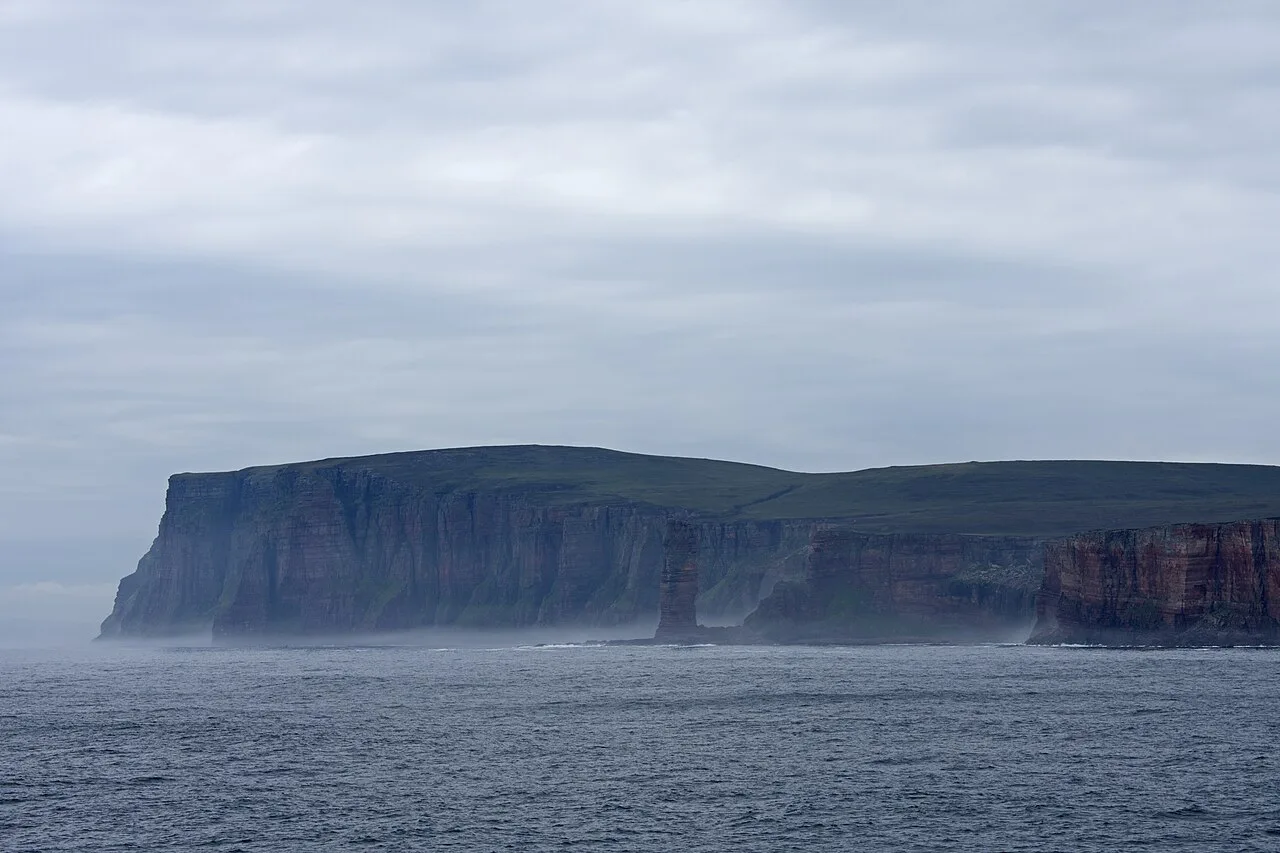
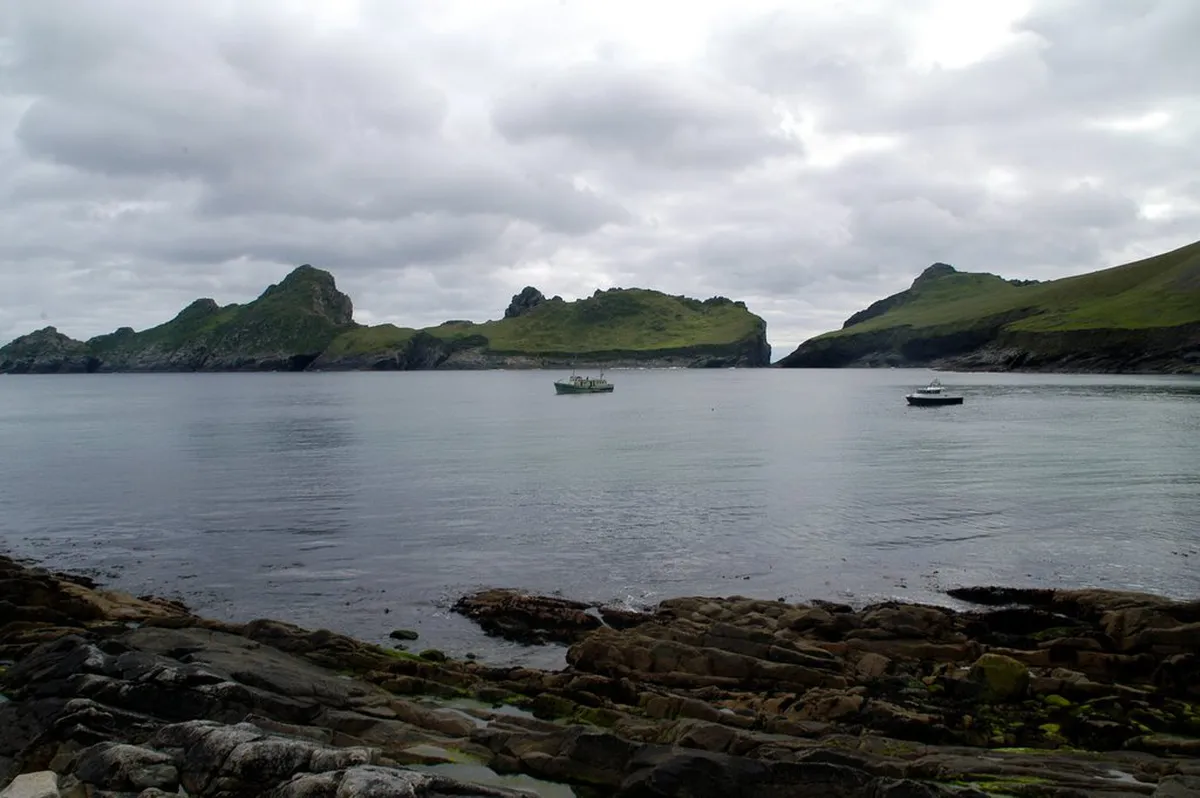
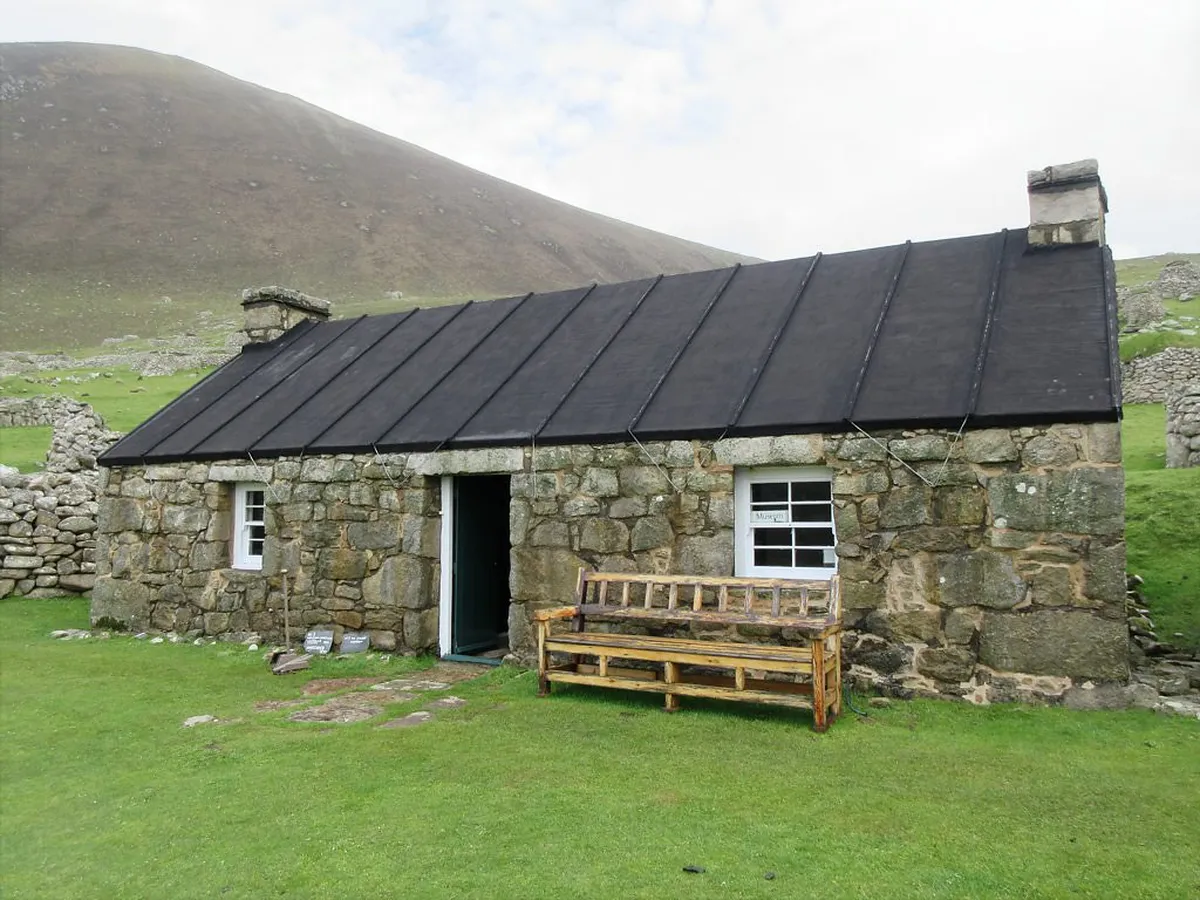
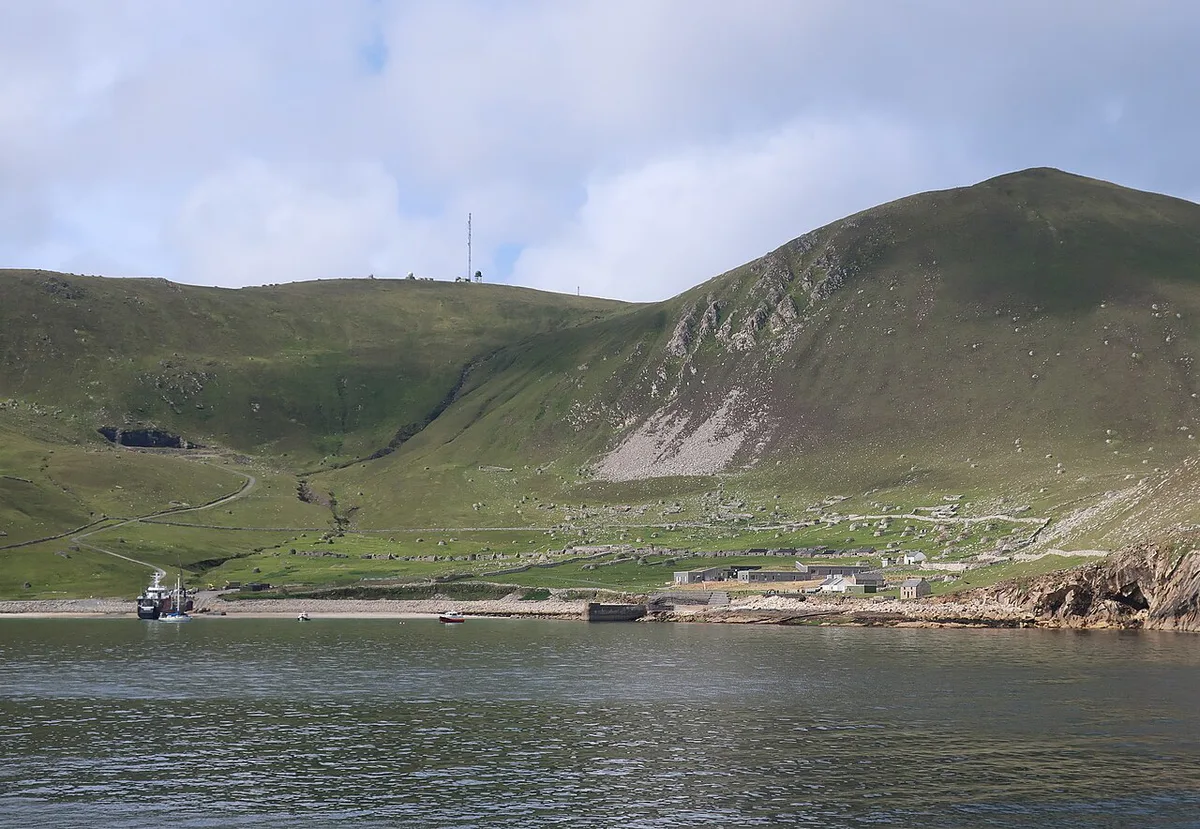
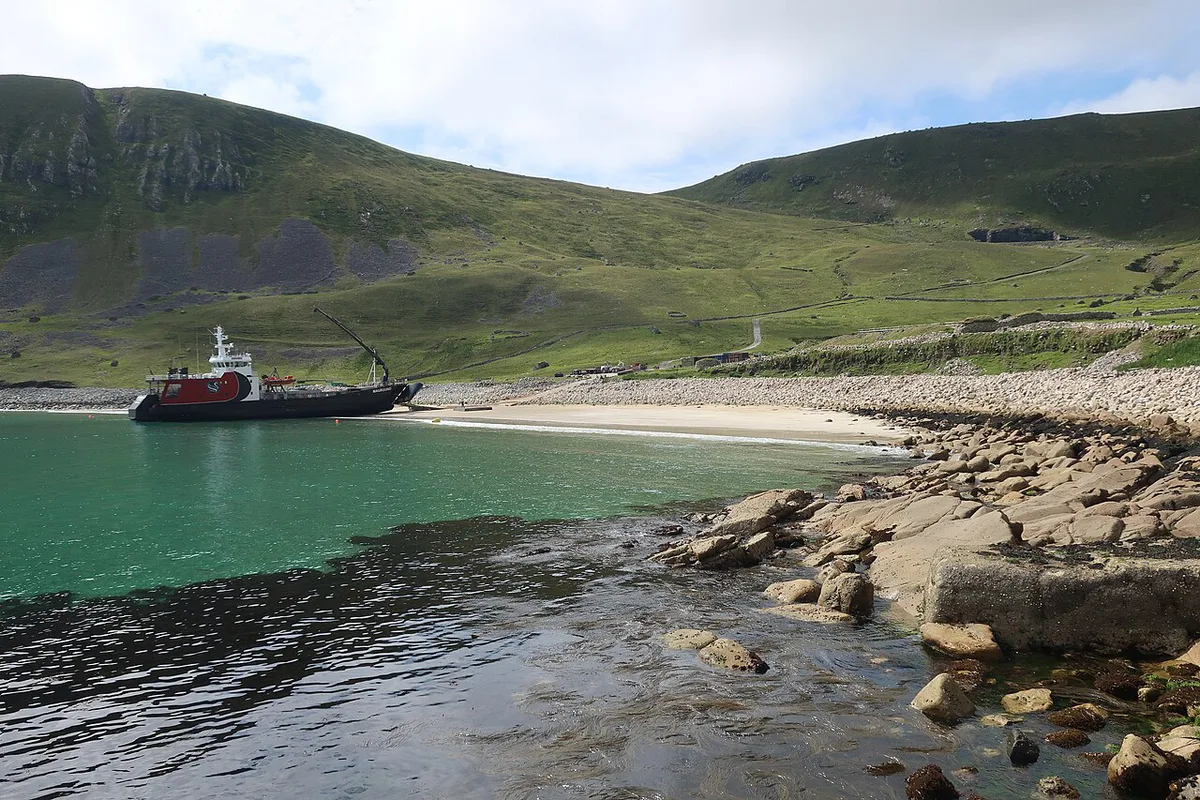
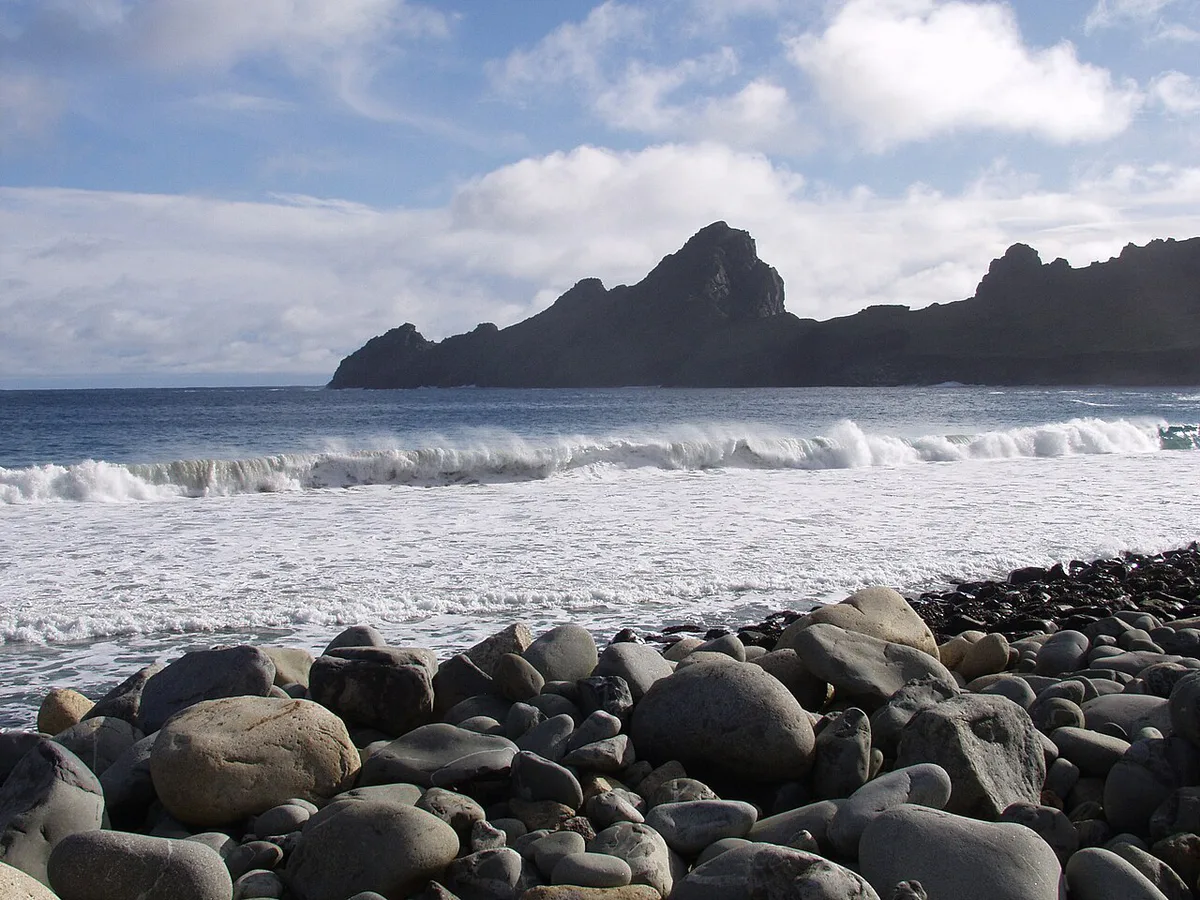
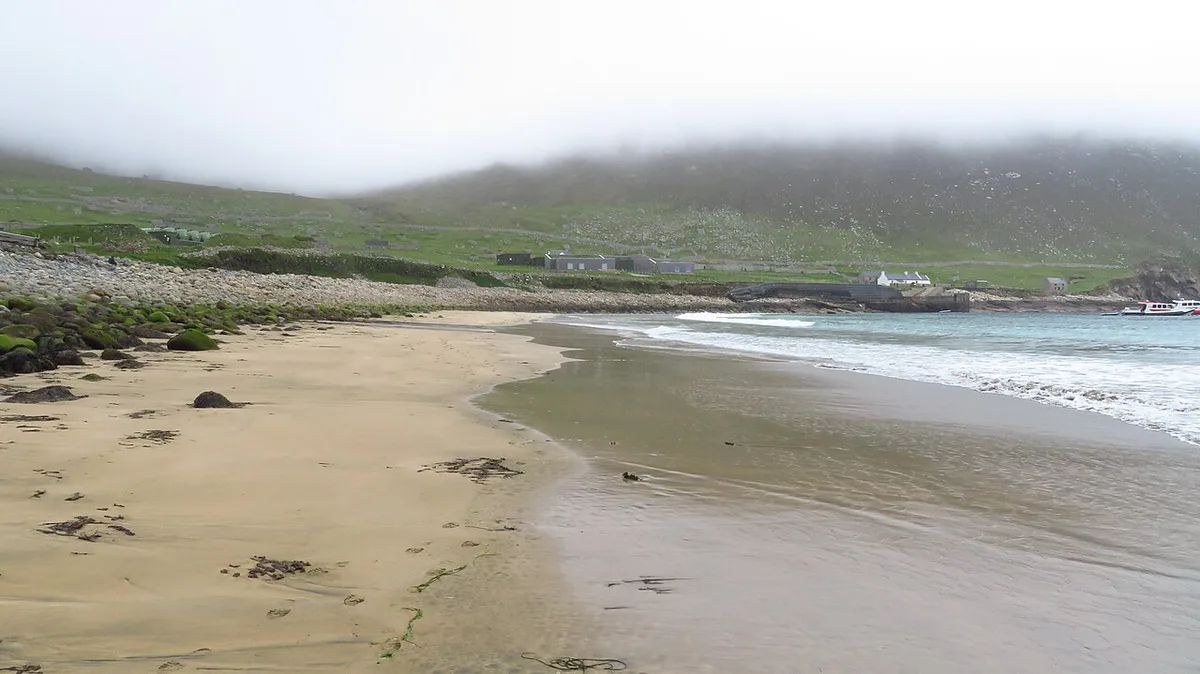
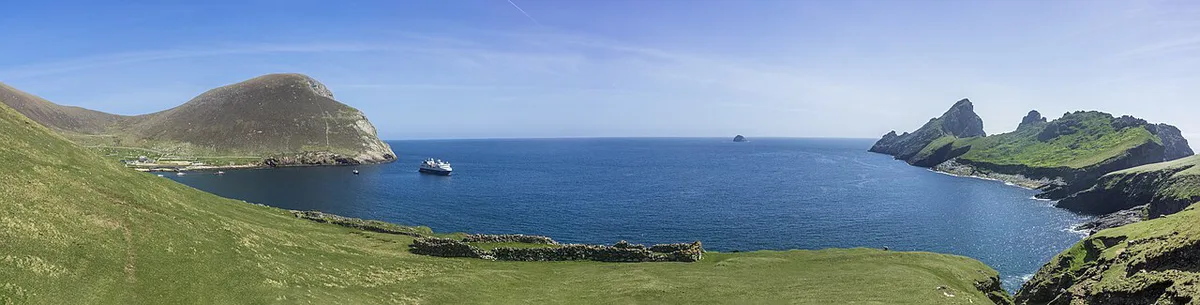
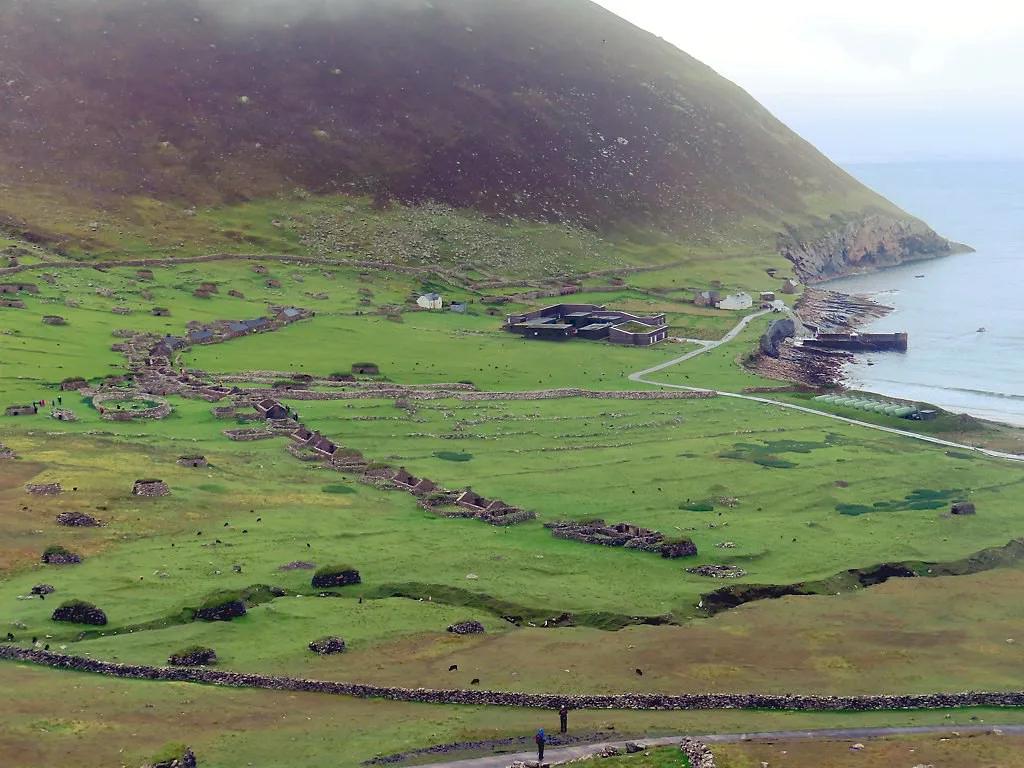
Village Bay on the east coast of Hirta is the most sheltered part of the island, because Dùn protects it from southeasterly winds. A new village was built here in the 1860s, with only a couple of dozen stone cottages along its street. Walk it slowly and look for the cleitean, the stone storage structures that islanders used to keep seabird eggs dry. Above the bay, cliffs hold nesting seabirds, and Soay sheep graze the slopes. Stac an Armin, a sea stack reported at 196 m, is among the highest in Britain. Pack waterproofs, layers, sea-sickness remedies and binoculars, and protect your camera from spray.
Stac an Armin's 196 m height is a draw, but whether you get ashore depends on the weather and whether the boat can land.
Walks on Hirta: Conachair, Mullach Mòr and the village
Time ashore is set by the boat operator, so decide before you land which walk you want. Most visitors choose one of three options, listed from shortest to longest.
- Village Bay and the cleitean. This is flat, sheltered and the safest use of a short landing. You can cover the village street, the cottages and the nearest cleitean at a slow pace, with time left for photographs.
- Oiseval (about 293 m). The hill on the north side of the bay is a moderate climb. It gives a view back over the village and the curve of the bay, and it is a sensible choice if the full ridge is out of reach.
- Mullach Mòr (about 361 m) and Conachair (about 430 m). These are the island's main summits. Conachair is the high point of Hirta, and its northern side drops away as one of the tallest sea cliffs in Britain. Mullach Mòr carries the army installations built after 1957. Both climbs are steep on open ground, so only attempt them if the operator confirms enough time ashore.
Practical points for walking
- Wear boots with grip. Wet grass and loose stone make the slopes slippery.
- Stay well back from cliff edges. Wind gusts on the ridge can be sudden and strong.
- Keep to paths and stay clear of nesting birds. Ground-nesting seabirds can defend their territory aggressively in summer.
- Check the time your boat leaves and allow a safety margin for the walk back to the landing.
Photography tips
Puffins, fulmars and gannets are most rewarding on a telephoto lens. A rain cover protects the camera from spray on the crossing. For the sea stacks, the light from the boat is often better than from the cliff top. Carry a lens cloth, because salt haze builds up quickly.
A short history: why St Kilda was abandoned
For centuries the community lived on sheep, barley, oats, potatoes and seabirds. Men climbed sheer rock faces for eggs and meat. Contact with outsiders grew in the late 1800s as steamers brought visitors. In 1851, 36 islanders emigrated to Australia, and the community never fully recovered. An influenza outbreak in 1913 followed. The population fell from 73 in 1920 to 37 in 1928, and a young woman died of appendicitis in 1929. In 1930 the remaining 36 people asked to be taken to the mainland, and the government evacuated them. The islands were left to birds and sheep until a small army base arrived in 1957.
Ownership changed in 1931, a year after the government evacuated the remaining 36 people in 1930.
Costs and booking
Operators set their own fares, and the price depends on the format and whether a landing is included. Check each operator's current page for what is included, and use Outer Hebrides tourism listings to find who is sailing.
Where to stay and plan around it
There are no hotels on Hirta, so base yourself on the mainland side. Harris and Lewis put you closest to the Leverburgh departures. North Uist Travel Guide: Ferry, Sights and Planning and Barra work if you are island-hopping, and CalMac ferry timetables show the links. Regional access information is on the VisitScotland Outer Hebrides page.
Mistakes to avoid and responsible visiting
Most disappointments come from planning, not from the island. Follow the Trust's rules ashore, including biosecurity checks and staying on paths.
- Booking with no spare day in the itinerary.
- Assuming a landing; some sailings only circle the islands.
- Packing for the mainland rather than for open sea and a windy island.
- Leaving paths, disturbing nesting seabirds or carrying seeds and soil ashore.
Alternatives if the boat is cancelled
No substitute equals St Kilda, but two island trips offer seabirds and boat time. Staffa is a short boat trip for puffins and basalt columns. Iona adds early Christian history. Those sit in the Inner Hebrides Guide: Best Islands, Ferries & Planning, which are easier to reach than the Outer Hebrides. For a wider view of the options, read the Hebrides overview.
Frequently Asked Questions
Can you stay on St Kilda island?
There are no hotels or regular lodging on Hirta. Military personnel and researchers have stayed there, and volunteer work parties have visited in summer. Ask the National Trust for Scotland about any current overnight options.
What language was spoken on St Kilda?
Islanders spoke Gaelic. Missionaries and visiting tourists later prompted many of them to learn English.
Useful notes for your next island trip
Optional updates to our guides.
You might also like
Continue reading
More guides you'll find useful